Introduction
There is no doubt, conventional doctors across the world work diligently to save lives alongside other health professionals. As they follow the allopathic model, they focus on different areas of the person to fix in order to save the whole body, striving to put that person back together so their lives can continue.
But does this model of putting back together and fixing a person really capture the essence of healing?
Healthcare practitioners following a holistic model recognise that health is influenced by multiple interconnected factors and pride themselves in seeking out the root of a condition, rather than just treating symptoms. But how often do they identify the deepest, truest root of a person’s dis-ease? And how often does this model really capture the essence of healing?
Healing
What is healing in fact? To heal literally means to ‘return to wholeness’ so putting back together and addressing root causes sounds important for this. However, whilst doctors and healthcare practitioners are often doing an amazing job at helping their patients return to wellness on some level, in most cases, a fundamental aspect of who they are and therefore a fundamental aspect of healing is missing.
Original wisdom, foundational to every religion and spiritual philosophy, states that we are tripartite beings with a physical body, a mind and a soul. Yet, in western medicine and sometimes even in holistic medicine, little attention is given to the soul.
When we as practitioners encourage those we are supporting to tend to the needs of their soul, there is an unfolding realisation that occurs that wholeness is already our true nature and on the deepest level nothing needs to be fixed. We believe that ultimately it is unconditional love that nourishes the soul and that this is the key to true and lasting healing.
My Experience
I started out my career as a health professional supporting those with a cancer diagnosis using nutritional therapy. Given my lifelong interest in spirituality and the need I recognised in some of my clients to explore deeper issues, especially those who were facing their mortality, it wasn’t long before I expanded my training including studying with the HeartMath Institute. From then on, I became fascinated with the heart and embarked on a journey of deep exploration as to the true nature of the heart in all its forms – physical, energetic and spiritual.
After several years of research and investigation, using heart connection in a clinical setting and, most importantly, building a relationship with my own heart, I came to see the heart as our Master Connector connecting us in three primary ways. First of all, the heart allows us a deep connection with ourselves attuning us to the needs of our body and mind, secondly the heart connects us, through its powerful energy fields, to others, and thirdly, it provides us with a direct connection to the Ultimate Creator, to our Source. This most important role of the heart has been known since ancient times.
What I also came to realise however, is that the way our heart connects us, in all three instances, is through love, the purest form of love which is unconditional. And more than that, I came to see, in my own life, and in others, that all forms of healing, whether physical, mental or emotional are activated when we allow this unconditional love to flow through us.
Whilst the focus of allopathic medicine is on fixing a person, it isn’t just the conventional health model that addresses healing in this manner, natural approaches sometimes follow the same route and I found this was often the case in the world of nutritional therapy. Okay, it was something more natural – a diet or supplement instead of a drug, but the intention was still to correct a problem. I also found that, whilst dietary and lifestyle upgrades often led to health improvements, it appeared the tending to and caring for oneself was the magic ingredient, more than the particular food or practice. The act of tending to one’s body is automatically an act of tending to the soul as we open the channels and allow love to flow through us, love for ourselves.
Helping Others
Not everyone is very good at tending to their needs and loving themselves; too many of us have a deeply ingrained notion that we don’t deserve love. This is where we can be so helpful as practitioners because when we give someone the space, time and genuine heartfelt attention, we communicate the message that they are deserving of love. When we are truly present with them with an open heart, it actually changes their physiology, our coherent heart energy bringing them into a more physiologically coherent state.
It has been my 26-year experience as a health practitioner as well as walking my own path of healing, that whenever attention is given to the already perfect nature of ourselves, as well as the overall perfection of life, and that whenever unconditional acceptance and love are the main focus, this opens the channels for healing. There is now a wealth of research showing that people who feel loved, supported, and socially connected tend to have better health outcomes.
However, we should be aware that healing does not always mean immediate physical recovery or cure, and sometimes that never comes. We all must die and I have had many of my clients die over the years. Those that had healed however were accepting of their impending death and whilst they may not have been able to explain why, they knew in their hearts that everything was just as it was meant to be.
Finally…
I would like to end by stating that it is important for us to absorb the notion that the truest form of healing is to remember our wholeness. Secondly, acknowledging that we already know the power of love to heal. We all know and have done since the moment we were born. In the words of Mother Teresa…
‘The most important medicine is tender love and care.’
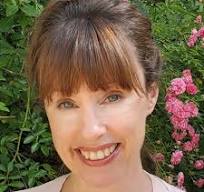
By Liz Butler